Space Tourism: The Ultimate Luxury Travel Experience Explained
Luxury travel has reached a new frontier where the journey extends beyond Earth’s atmosphere. What was once the domain of astronauts now attracts those seeking the most exclusive experiences imaginable. Space tourism transforms luxury travel by offering private voyages that blend comfort, innovation, and the rare opportunity to view Earth from orbit.
This emerging industry combines advanced technology with personalized service. Companies like SpaceX, Blue Origin, and Virgin Galactic lead the movement, developing spacecraft designed for both safety and elegance. From short suborbital flights to multi-day stays in orbiting habitats, these ventures redefine what it means to travel in style.
As technology evolves, the possibilities expand—from luxury orbital retreats to future lunar getaways. The coming years promise a new era where exploration and indulgence meet, setting the stage for a travel experience unlike any on Earth.
What Is Space Tourism?
Space tourism refers to human space travel for leisure, recreation, or business rather than scientific or governmental missions. It involves both suborbital and orbital experiences, offering travelers the chance to view Earth from space and experience weightlessness. This growing industry combines aerospace innovation with luxury hospitality to create exclusive adventures for high-net-worth individuals.
Evolution from Science Fiction to Reality
Space tourism has evolved from a futuristic concept into an active commercial market. Early visions of civilian space travel appeared in mid-20th-century science fiction, but real progress began when private companies entered the field.
Firms such as SpaceX, Blue Origin, and Virgin Galactic have turned the idea into reality by developing reusable rockets and passenger spacecraft. According to Wikipedia’s overview of space tourism, these companies now offer suborbital and orbital flights for paying passengers.
Luxury space travel has become a niche for the ultra-wealthy. Companies are designing orbital hotels and capsule experiences that merge comfort with exploration, as noted in Resident’s feature on luxury beyond Earth.
Leading Space Tourism Companies
Private spaceflight has become a competitive field led by companies transforming how civilians reach orbit and beyond. Reusable rockets, air-launched spaceplanes, and balloon-based capsules now offer distinct ways to experience space while reducing costs and improving safety standards.
SpaceX and the Starship Experience
SpaceX leads orbital space tourism through its Crew Dragon missions and upcoming Starship program. The company, founded by Elon Musk, focuses on reusable spacecraft that lower launch costs and expand access to space.
Crew Dragon has already flown private crews in multi-day orbital missions, including Axiom Space’s planned commercial flights to the Axiom Space Station. These missions offer extended stays in low Earth orbit with professional-grade training and life-support systems.
Starship, still in development, aims to carry up to 100 passengers for deep-space tourism, including lunar flybys. Its stainless-steel design and full reusability promise lower ticket prices and higher payload capacity. SpaceX’s progress has set new standards for reliability and scalability in commercial space travel.
Virgin Galactic’s Suborbital Flights
Virgin Galactic, founded by Richard Branson, uses an air-launched system to deliver short suborbital experiences. Its SpaceShipTwo vehicle detaches from the WhiteKnightTwo mothership at about 50,000 feet before igniting its rocket motor to reach the edge of space.
Flights provide several minutes of weightlessness and views of Earth’s curvature. Passengers undergo days of preflight training at Spaceport America in New Mexico to prepare for the experience.
Tickets cost around $450,000 per seat, targeting high-end travelers seeking a brief but genuine spaceflight. The company emphasizes comfort and accessibility, offering a smoother ascent compared to vertical rocket launches. As noted by Space Tourism Companies: A Detailed Guide, Virgin Galactic’s approach appeals to those preferring an airplane-like takeoff and landing.
Blue Origin and New Shepard
Blue Origin, founded by Jeff Bezos, operates New Shepard, a fully autonomous suborbital rocket designed for six passengers. The capsule crosses the Kármán line—about 62 miles above Earth—before descending under parachutes for a soft landing.
The 11-minute flight includes roughly four minutes of weightlessness and panoramic views through large windows. The rocket and capsule are both reusable, allowing faster turnaround between flights.
Blue Origin’s focus on automation and reusability makes it a key competitor in suborbital tourism. The company has flown celebrities and private customers, including William Shatner, to highlight accessibility. Details from SpaceVoyageVentures show that safety systems and extensive testing underpin its operations.
Emerging Players and Future Projects
New entrants are expanding the market beyond rockets. Space Perspective offers carbon-neutral balloon flights that ascend to 100,000 feet for extended high-altitude views. HALO Space and Orbital Assembly Corporation plan near-space experiences and rotating space hotels for longer stays.
Axiom Space is developing a private orbital station to host tourists and researchers. Its modular design allows attachment to the ISS before operating independently by 2030.
Sierra Space is advancing the Dream Chaser spaceplane, which can land on runways, offering a gentler return than capsule splashdowns. According to Top 8 Space Tourism Companies and Experiences to Watch in 2025, these innovations signal a shift toward more diverse, sustainable, and comfortable space tourism options.
The Ultimate Luxury Space Experience
Luxury space tourism offers travelers an unmatched combination of comfort, technology, and perspective. It blends high-end amenities, extraordinary views of Earth, and the rare sensation of weightlessness into one of the most exclusive travel experiences available today.
Exclusive Amenities and Accommodations
Private space companies design spacecraft interiors to meet the expectations of the ultra-wealthy. Cabins feature ergonomic seating, customizable lighting, and advanced climate control to maintain comfort in microgravity. Some spacecraft incorporate personal pods for privacy and rest, similar to first-class airline suites but adapted for orbital conditions.
Dining experiences include gourmet space cuisine developed to perform well in zero gravity. Meals are often prepared with high-quality ingredients and designed for both nutrition and presentation. Companies such as Valor Flights highlight how chefs collaborate with engineers to ensure food safety and taste in space.
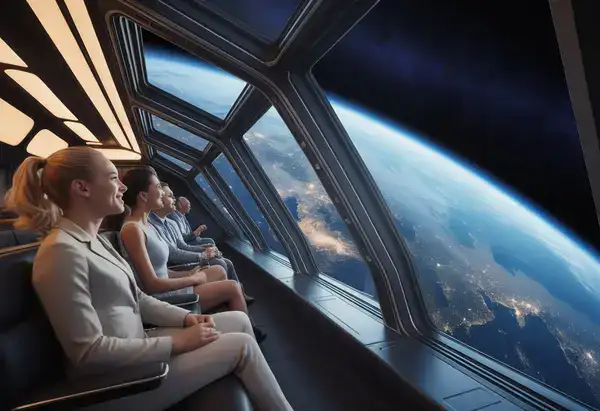
Entertainment systems, communication access, and panoramic observation lounges enhance the sense of exclusivity. Every element—from materials used in furnishings to onboard service—is engineered to deliver comfort comparable to luxury hotels on Earth.
Panoramic Views of Earth
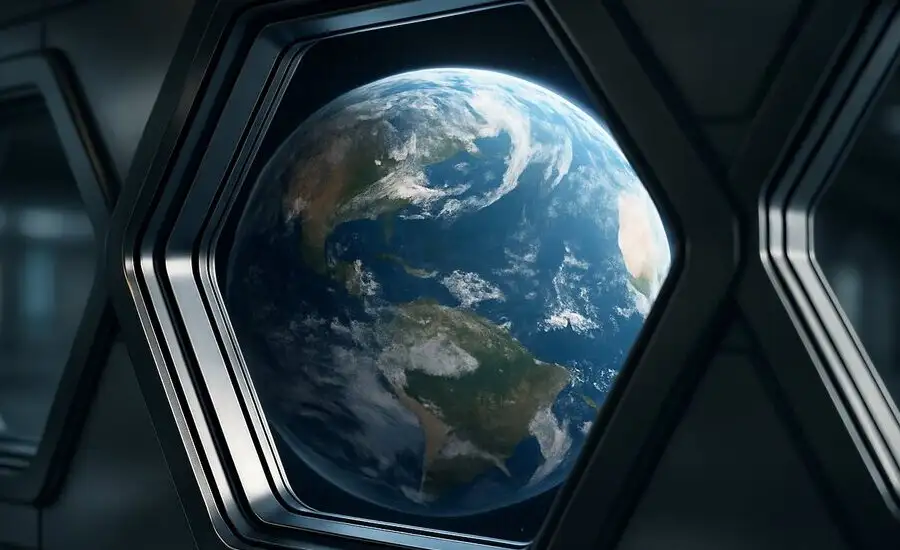
The defining visual experience of luxury space tourism is the panoramic view of Earth. Passengers can observe continents, oceans, and atmospheric patterns through large, reinforced windows designed for safety and clarity. These windows provide a 360-degree perspective that no terrestrial destination can replicate. The curvature of the planet, visible sunsets, and the thin blue line of the atmosphere create an experience that combines serenity with scientific fascination.
Many travelers describe the view as both humbling and inspiring, offering a visual reminder of Earth’s fragility. The opportunity to photograph or livestream these moments adds another layer of exclusivity for those who wish to share their journey.
Zero Gravity and Weightlessness Activities
Experiencing zero gravity remains one of the most distinctive aspects of luxury space travel. Passengers float freely within the cabin, guided by trained staff who ensure safety and comfort. These sessions allow travelers to perform simple movements, enjoy slow-motion spins, or even share meals while suspended in mid-air.
Training before launch helps participants adjust to the sensation of weightlessness, reducing discomfort and enhancing enjoyment. Preparation includes orientation on movement control and the effects of microgravity on the body.
Types of Space Tourism Adventures
Commercial space travel now spans short suborbital hops, multi-day orbital stays, and future missions beyond Earth’s orbit. Each category differs in altitude, duration, and cost, offering travelers distinct levels of immersion in microgravity and views of the planet below.
Suborbital Flights Above the Kármán Line
Suborbital flights take passengers just beyond the Kármán line, about 62 miles above the planet. At that height, you’ll get a few minutes of weightlessness and a sweeping view of Earth’s curve—definitely not your average window seat.
Virgin Galactic and Blue Origin are the main players here. Virgin Galactic flies an air-launched spaceplane, while Blue Origin’s New Shepard rocket blasts off vertically from Texas. Both vehicles return safely to the ground, with the whole trip lasting around 10 to 15 minutes.
Seats typically cost anywhere from $200,000 to $450,000, depending on the company and the training offered. According to Space Voyage Ventures, suborbital experiences are the most approachable form of space tourism—minimal prep, no crazy astronaut boot camp, just a few briefings and you’re set.
Orbital Vacations and Space Hotels
Orbital missions are a whole different ballgame, circling Earth at over 200 miles up. Travelers spend several days in orbit, floating in microgravity and catching a ridiculous number of sunrises and sunsets every 24 hours.
SpaceX leads this field with its Crew Dragon capsule, which can take up to four civilians on multi-day trips. These journeys might include docking with the International Space Station or, eventually, visiting private space hotels as they come online.
Lunar Tourism and Mars Missions
Lunar tourism is on the horizon. Planned missions will loop passengers around the Moon, offering a close-up of the lunar surface and that iconic Earthrise. SpaceX’s Starship is being built for these deep-space trips, with reusability in mind.
Looking further out, Mars missions are the ultimate goal for interplanetary travel. These will need next-level spacecraft engineering, better radiation shielding, and life-support systems built for the long haul. It’s still early days, but companies are sketching out lunar flybys and, eventually, surface visits.
Technological Advancements in Space Tourism
Tech breakthroughs have taken commercial spaceflight from wild experiment to a real industry. Reusable rockets, smarter spacecraft, and advances in materials science are making civilian space travel safer, cheaper, and—let’s be honest—a lot more exciting.
Reusable Rockets and Reduced Costs
Reusable rockets have changed the game. SpaceX and Blue Origin have shown you can launch, land, and fly again with surprisingly little refurbishment. This brings costs way down and lets companies fly more often.
The Falcon 9 and New Shepard rockets are prime examples. Both use vertical landings to recover expensive components like boosters, instead of tossing them after one use. That’s a huge deal for launch economics and turnaround time.
There’s also a sustainability angle here. By cutting down on waste and resource use, reusable systems shrink the environmental footprint of frequent launches. It’s a step toward making space tourism more scalable and—dare I say—responsible.
Innovations in Spacecraft Design
Today’s spacecraft are built with passenger safety and comfort in mind. Think ergonomic seats, giant windows, and redundant life-support systems—all designed to keep travelers safe and (relatively) relaxed. Virgin Galactic and Blue Origin have gone modular, so interiors can be tweaked for different kinds of trips. That’s handy for balancing weight and making cabins more flexible, whether the flight is quick or multi-day.
Advanced avionics and AI-powered navigation are taking over a lot of the heavy lifting, reducing pilot workload and boosting safety.
Materials Science and Safety
Materials science is really the unsung hero here. Lightweight composites, heat-resistant alloys, and ceramic shields all help spacecraft survive the crazy temperatures and forces of space travel.
Using strong but light materials—like carbon fiber-reinforced polymers—means more payload and better fuel efficiency. It’s not glamorous, but it matters a lot.d
The Near Future of Luxury Space Travel
Luxury space travel is picking up speed. The market’s expanding, there’s more talk about sustainability, and journeys beyond Earth’s orbit are inching closer to reality. With new spacecraft, smarter materials, and better life-support, what used to be science fiction is starting to look like a real option for the world’s wealthiest travelers.
Market Growth and Accessibility
The space tourism industry is on track to hit $8 billion by 2030, powered by private ventures like SpaceX, Blue Origin, and Virgin Galactic. They’re constantly refining reusable rockets and modular spacecraft to slash costs and fly more often.
For now, the ultra-wealthy are still the main customers, but as prices drop, a broader luxury market may get a taste. Orbital hotels and lunar resorts are already being dreamed up to offer experiences that used to be reserved for astronauts.
What’s driving all this?
- Better reusable launch tech
- More competition between private companies
- New infrastructure, like orbital stations and training centers
It seems likely that space tourism will shift from a novelty to a proper industry, with real service tiers and actual safety standards.
Sustainability and Environmental Impact
As more rockets launch, sustainability is getting harder to ignore. Frequent flights pump carbon and black carbon into the upper atmosphere, which isn’t great for the environment. To tackle this, some companies are working on green propellants and hybrid fuels to cut emissions.
Others are testing closed-loop life-support systems that recycle air and water on board. Firms like Axiom Space and Space Perspective are building capsules designed to minimize waste and energy use, while still offering luxury touches.
There’s also talk of offsetting the environmental impact with carbon capture projects and renewable energy for ground ops. The real challenge? Balancing innovation with responsibility, so that luxury space travel doesn’t end up at odds with the planet’s needs.
Expanding Horizons: Beyond Earth Orbit
Future luxury travel might not stop at low-Earth orbit—there’s real momentum toward the Moon, and yeah, maybe even Mars someday. Companies like Orbital Assembly and Bigelow Aerospace are tossing around some wild ideas for lunar habitats and orbital resorts.
Potential destinations:
| Destination | Experience Type | Estimated Timeline |
|---|---|---|
| Low-Earth Orbit | Short stays, panoramic views | 2025–2030 |
| Moon Orbit | Extended luxury stays | 2030–2035 |
| Lunar Surface | Resort-style habitats | 2035+ |
Of course, all of this hinges on breakthroughs in space exploration infrastructure and, honestly, figuring out how to keep people alive and comfortable for longer stretches. If the tech catches up, luxury travelers could soon be booking multi-week adventures in orbit or even on the Moon itself. That’s not just a new chapter—it’s a whole new book for off-world leisure.